

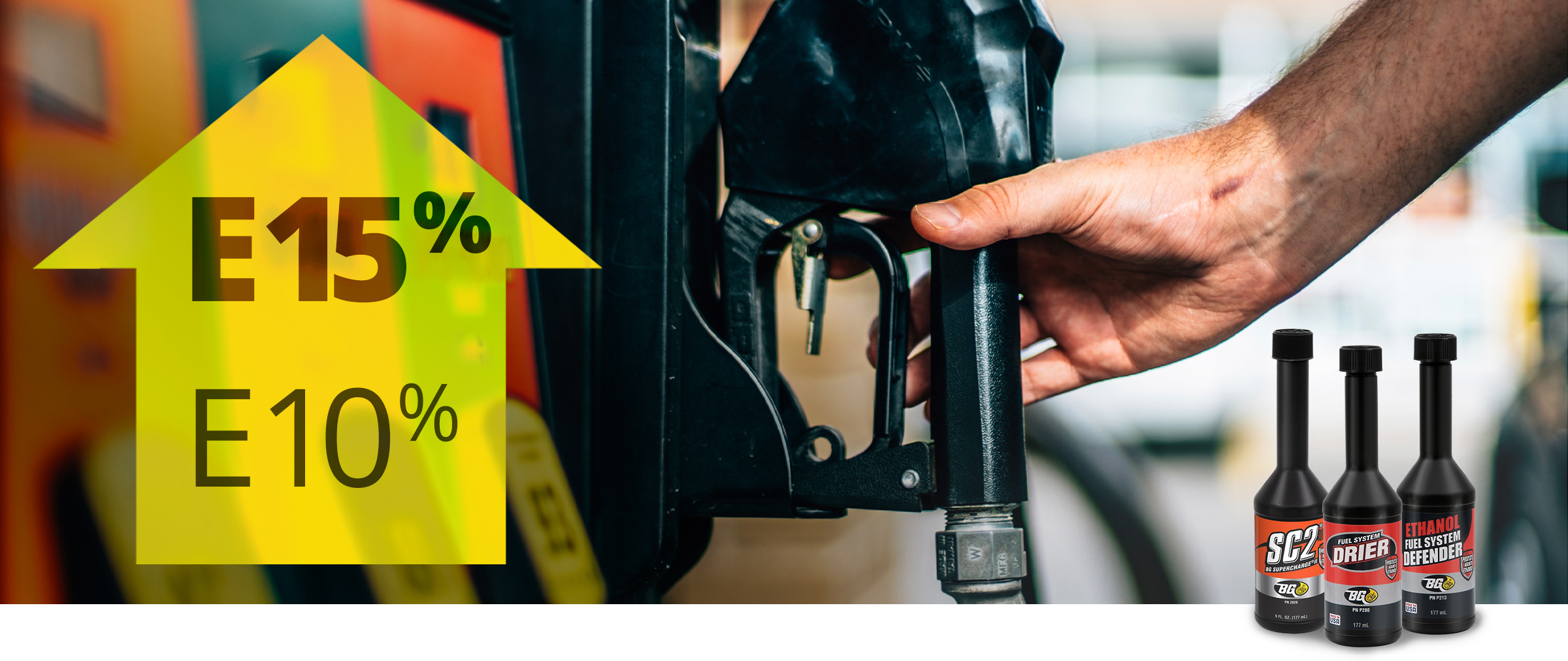
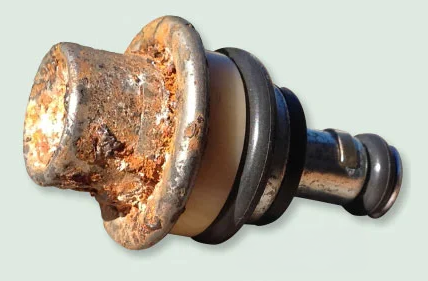
Some of the less-attractive attributes of ethanol relate to its mildly acidic nature. E15 accelerates the corrosion reaction in metals commonly found in fuel systems, especially iron, silver, and copper—primary components found in OEM fuel pumps and fuel delivery systems. As these metals oxidize, they form a passive oxidation layer that creates harmful deposits. As the fuel pressure regulator below shows, damage from both E10 and E15 can cause parts failure.*
To counteract this chemical attack on metal parts, specific corrosion inhibitors should be added to the E10 and E15 fuel at regular intervals.
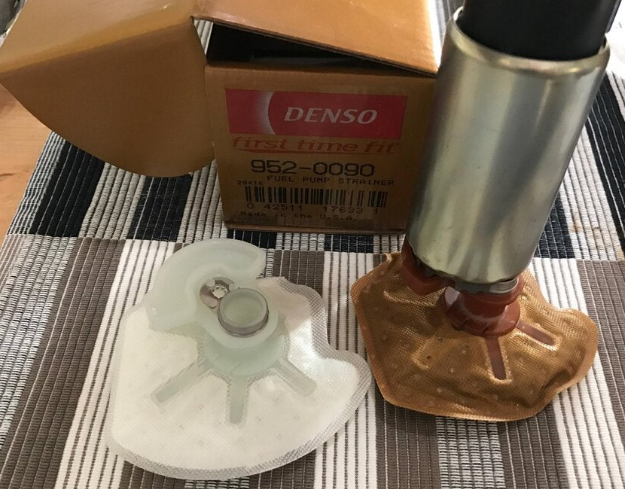
In addition, E15 may create more fuel gums than E10, thus restricting fuel pump strainers. Over time, this can eventually ruin the fuel pump due to overheating.
As with all alcohol-blended fuels, water absorption through condensation increases dramatically when using E15 fuel. Gasoline with a higher alcohol content more readily attracts and holds water. At the very least, this may damage fuel injectors and high-pressure fuel systems. Since water turns to steam under high temperatures and pressures, mitigating this problem in E15 fuel is a priority.
This makes regular fuel system maintenance more critical than ever to prevent drivability issues and protect high-pressure systems.
Finally, E15 fuel destabilizes and separates more readily than E10 fuel. E15 has a tendency to separate into distinct layers of free water and “stale” gasoline when excess water contaminates the fuel. This causes the ethanol to bond with the water and drop out of the gasoline solution, creating a high-density alcohol-water layer at the bottom of the tank and leaving low-octane, irregular gasoline floating on top. The result can be severe engine damage or stalling. This condition is most often seen in storage and dispensing systems handling E10 and E15 fuels.
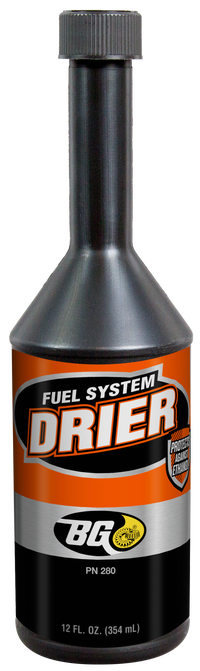 BG Fuel System Drier, PN 280:
Introduce this product with regular frequency. It stabilizes E15 fuel to prevent water separation. The higher the risk of water absorption in your area, the more often it should be used.
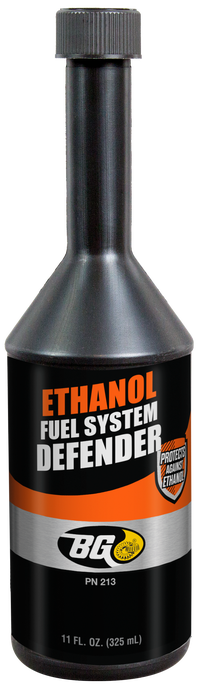 BG Ethanol Fuel System Defender, PN 213:
Use regularly to help protect metal components from oxidation and corrosion associated with E15 fuel. It keeps fuel pumps and pressure regulators deposit-free and operating properly. It contains proprietary detergents to keep fuel components free of deposits, along with special antioxidants to help keep fuel stable and fresh.
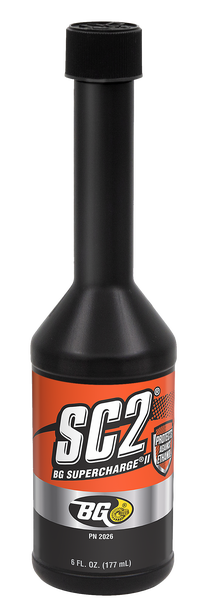 BG Supercharge® II, PN 202:
Use this product between BG Ethanol Fuel System Defender treatments if extra protection is desired between oil changes. It helps stabilize fuel and protects the fuel system from corrosion.