

By Andy Berlin, Product Technical Service Representative
I speak with a lot of folks about continuously variable transmission (CVT) technology and their unique lubricant demands. However, there is a rapidly growing type of CVT that can be found in many hybrid vehicles called electronic continuously variable transmission (eCVT). These types of transmissions bear little mechanical resemblance to traditional belt-driven CVT systems that most people are familiar with. Therefore, it is no surprise that their lubricant demands are quite different. Let me explain.
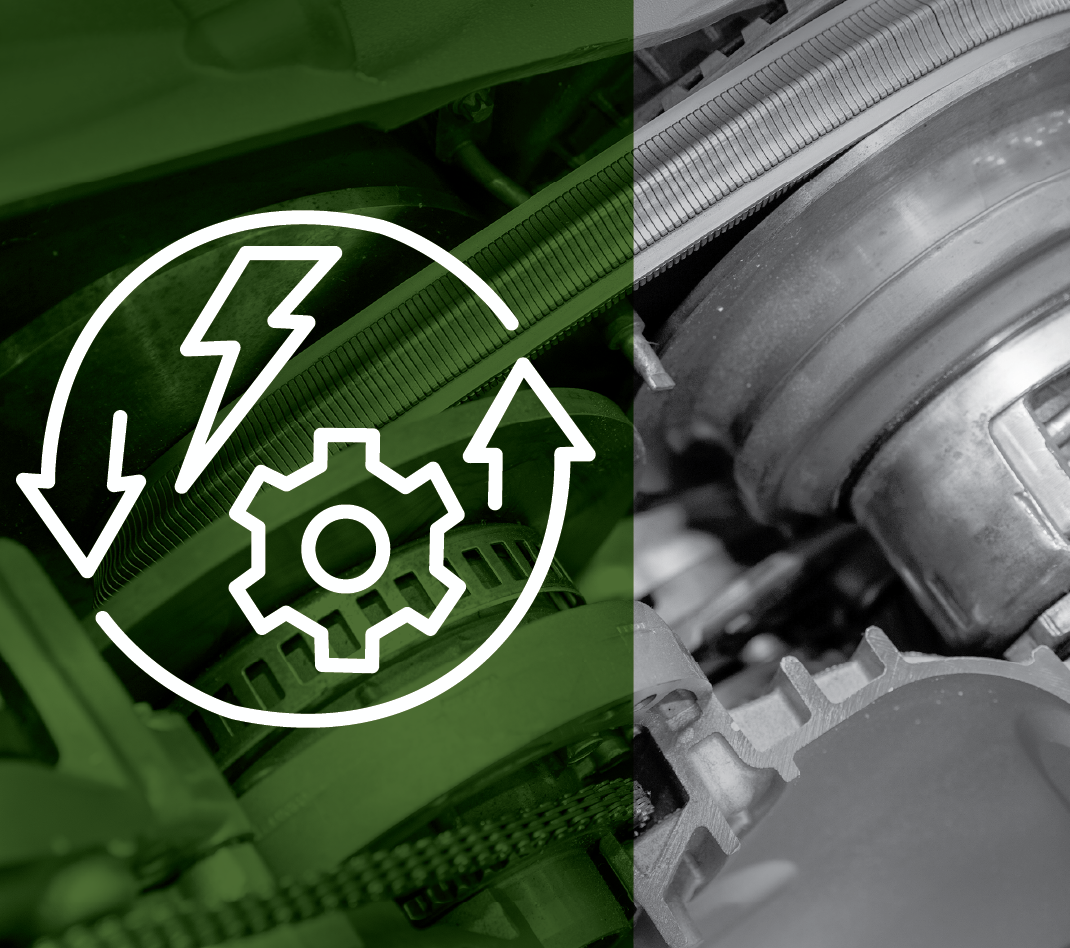
I will start with a brief review of traditional belt-driven CVT technology. These systems use a metallic ribbed belt that runs across variable-diameter pulleys. Unlike a traditional transmission with predetermined gears and gear ratios, a CVT uses variable-size pulleys that can expand and contract to operate at the most efficient gear ratio. This creates variable speeds while the engine operates within the optimal power range to maximize fuel economy. A tremendous amount of metal-on-metal friction and wear occur between the belt and pulley in these types of CVT systems. This is the primary reason why many CVTs are not as long-lived as other types of transmissions. This also demands a lubricant with a heavy dose of anti-wear chemistry to protect system components from damage.
An eCVT is quite different from an engineering perspective. Typically, the weak point for a traditional CVT unit is the belt. By contrast, an eCVT uses an electric motor that receives power from an internal combustion engine and sends it through a planetary gearset to propel the vehicle forward. In an eCVT, the continuously variable component is the electricity sent to the electric motor. These types of transmissions are sometimes referred to as series-parallel or (more commonly) power-split design. These systems have very little friction compared with a belt-driven CVT. In fact, the primary purpose of the lubricant in eCVT is to cool the electric motor, with lubrication being a secondary concern. They are commonly factory-filled with regular ATF, which provides the necessary performance requirements while being more economical. Plus, eCVTs are extremely fuel-efficient and perhaps the most reliable transmission on the market.
Toyota/Lexus, Honda/Acura, and Ford have incorporated these power-split style eCVTs into their hybrid vehicles for many years. These have been historically filled with ATF WS for Toyota/Lexus, ATF DW-1 for Honda/Acura, and Mercon LV for Ford hybrid vehicles. Notably, some OEMs have moved in recent years to new fluids with names that do not resemble traditional ATFs, such as E-Transaxle TE (Toyota) and HEVF Type 1.0 (Honda). However, after our analysis and investigation into these newer lubricants, we have determined that they are quite similar to the ATF that they have traditionally used, only without the customary red dye.
This research has led our BG Product Technology team to alter our guidance and fluid recommendations for these eCVTs. Historically, we have advised folks to use our CVT fluid, BG 318, paired with the 6610 CVT/DCT kit. This was an attempt to consolidate and simplify our fluid recommendations and align with the Lifetime BG Protection Plan (LPP®) under the common name of CVT. However, based on our research, BG 315 is our best lubricant to service these vehicles with, and we advise technicians to pair it with the 6610 CVT service kit. LPP® has been modified to provide qualifying coverage and to reflect these changes.

“The weak point for a traditional CVT unit is the belt. An eCVT system has very little friction compared with a belt-driven CVT. In fact, the primary purpose of the lubricant in an eCVT is to cool the electric motor, with lubrication being a secondary concern.”
You will find these power-split eCVTs across the Toyota/Lexus, Honda/Acura, and Ford hybrid lineups. These OEMs comprise the overwhelming majority of the hybrid vehicle market, so we have updated our ATF application chart with an asterisk to reflect these changes, and our IT/VMA team is updating our service guides with this latest guidance, as well.
In review, traditional belt-driven CVTs should be serviced as always with BG 318 and the 6610 kit, while hybrid eCVTs should use BG 315 paired with the 6610 kits. Hybrid vehicles are rapidly growing in numbers in the United States, with most incorporating power-split eCVT technology. Make sure that you are educating your accounts about these changes so they can best align their businesses accordingly.

About the Author
Andy Berlin has more than 20 years of experience as a chemist and laboratory analyst prior to joining the BG Products, Inc., R&D team as a Product Technical Service Representative. He acts as a technical advisor, helping international and domestic distributors and sales representatives understand BG product chemistry and applications.